Buried in the Google Ads documentation for Asset studio is a line about housekeeping: everything you generate in it is kept for 55 days. Projects, images, video, the lot, then gone. We noticed it because it is such an odd thing to specify, and it tells you what Google thinks these assets are. Stock, not work.
Our honest reaction to the current generation of ad creative tools is relief followed by unease, roughly in that order, and the unease is not about quality.
What the platforms will now do for you
Asset studio is Google’s in-platform creative workspace, built on the Nano Banana Pro image generation model, with image editing, video building, voiceover, batch work and SynthID watermarking so generated images can be identified later. In Performance Max, Google AI will generate headlines, descriptions, images, logos, business names and video assets from your website.
Meta announced Muse Image on 7 July 2026, its first image model from Meta Superintelligence Labs, and said in the launch post that advertisers and agencies would get it through Advantage+ creative within weeks. That has since landed alongside the rest of the Advantage+ enhancement set.
The relief is real. Producing enough assets to fill a modern campaign type by hand was tedious work with a low ceiling, and it ate hours that bought nothing. Handing it over is a sensible trade.
The sentence Google put in its own documentation
Here is the part worth reading twice, from Google’s own help page on generating a Performance Max asset group: “Assets created by generative AI aren’t guaranteed to be approved by Ads Policy and advertisers should review any generated or suggested assets before publishing them to ensure that they’re accurate, not misleading, and not in violation of any Google advertising policies or applicable laws.”
And, separately: “Generative AI, being experimental, might show inaccurate or offensive content that doesn’t reflect Google’s views.”
That is the vendor telling you, in writing, that the accuracy of the claims in your own ads remains entirely your problem. We would rather clients read that sentence than any agency’s reassurance about it, including ours.
What nobody has published
We went looking for a controlled comparison of generated against human-made creative, at the budget level a business in Varna or Sofia actually spends, and did not find one. Meta’s Muse Image announcement contains no performance figures at all, only qualitative praise from advertisers who tested it. Google’s documentation describes capability rather than outcome.
What circulates instead is a set of numbers with no checkable origin: a ROAS uplift attributed to a McKinsey study, a conversion figure attributed to Think with Google, a claim that refreshing assets fortnightly multiplies return. We could not trace any of them to a published method, a sample, or a control group. We are not repeating them, and if a pitch deck hands you one, ask who was measured and against what.
So the honest position is that automated creative production demonstrably saves labour and has not been shown, publicly, to produce better results than a competent person working from real information about the business. Those are different claims and the industry keeps merging them.
What the system cannot do
Everything upstream of the asset. An optimiser works inside the space you define for it and will not question the space.
The offer
No volume of creative testing repairs an offer the market does not want, or a price that is wrong for the audience you are buying. This is the commonest cause of a campaign that fails while every diagnostic looks healthy. The account is doing exactly what it was told.
What is true about your business
Generated copy will state delivery times, guarantees and ranges of service that sound plausible and are not accurate. In regulated categories that is a compliance exposure rather than a quality issue, and the platform has already told you whose exposure it is.
Brand coherence
An optimiser is perfectly happy to produce an ad that performs well and looks nothing like your website. The cost lands after the click, when the visitor arrives and spends a second working out whether they are in the right place. Something improved; it was not the thing you were paid for.
Reading a test you lost
The platform reports which variant won. It does not tell you why, and why is the only part that makes the next test better. Deciding whether a result came from the message, the audience, the season or an accident is human work, and doing it well is most of the difference between an account that improves and an account that just churns assets.
Running a test that teaches you something
The way to get value out of generated assets is to keep hold of the variable.
- Write the hypothesis down first, in one sentence. We believe leading with price beats leading with speed for plumbers in Varna. If you cannot write that sentence, you are shuffling, not testing.
- Change one thing that matters. The angle, the promise, the proof, the offer. Not the headline and the image and the button at once.
- Give the platform a good starting point. Feed it your best-performing human-written assets and real detail about the business. Generated variations on something good behave differently from generated variations on nothing.
- Use the built-in experiment tooling instead of comparing last month to this month. Different traffic, different competition, and a conclusion you will defend for a year.
- Work out what counts as enough conversions for your own volume before you start, and then wait that long.
- Have a named person approve every asset before it serves. Every time, including the week you are busy.
Then write down what you concluded, not which ad won. This is the part that almost nobody does and it is the only output of the process that keeps its value. Remember the 55 days. Google is explicit that the creative is disposable, and it is right. Your file of conclusions about what your market responds to is not on any retention schedule, and it is the only thing in this workflow that compounds.
What worries us is that the cheaper execution gets, the less of an advantage it is, and a great many businesses are now spending hard on the part that stopped being scarce. When we review a paid account the constraint sits upstream of the creative more often than not.
Take your current best ad and write one sentence explaining why you think it works. If that sentence is hard to write, the creative was never the bottleneck.
 Business Club Varna2 years, 140+ members, zero ad spend
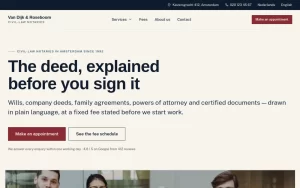 Van Dijk & RoseboomPublished fees, Dutch and English as equals
 Construction Elite RoofingCost per booked job cut by 41%
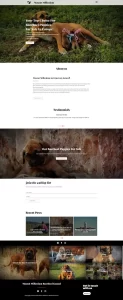 Mascot MilleniumBuyers from 12 countries in year one
 Solene EstatesLive filtering across sale and rental
 Ignite Art UniversityFiltered course finder, ten degrees
 Marchetti Italian FurnitureSeparate catalogue and bespoke paths
 KUKUIPart of the team managing $8M+ a year