Somebody’s laptop is open on the table and the ad account is on screen. Cost per click looks normal. Leads are arriving. Then comes the sentence we heard at that table for two years, running a business club in Varna: the marketing is not working.
Almost every time, we asked to see the quote the business actually sends out. Almost every time the problem was sitting in it. Traffic was rarely the bottleneck. The thing being sold was.
An offer is not your service list
An offer is the specific promise a buyer is asked to accept, at a specific price, with a specific set of risks attached to them. “Web design” is a service. “A rebuilt site, live in six weeks, old URLs redirected so your rankings survive, half paid up front and half on launch” is an offer.
Most small businesses never write the second version. They publish the service list, put budget behind it, then judge the channel on a decision the buyer was never really given.
Simon-Kucher, the pricing consultancy, puts the share of product and service launches that miss their financial targets or fail outright at 72 percent. Their explanation, set out at length in Madhavan Ramanujam and Georg Tacke’s Monetizing Innovation (Wiley, 2016), is that firms build the thing first and work out what to charge and who will care afterwards. Small businesses do the same thing one service at a time.
Telling an offer problem from a marketing problem
You can usually separate them in an afternoon. Offer problems look like this:
- Enquiries arrive, and most ask for a discount within the first two messages.
- Prospects go quiet after the proposal rather than objecting to anything specific.
- Your close rate is roughly the same whichever channel sent the lead.
- Neither you nor anyone who sells for you can say in one sentence why a buyer should pick you over the two obvious alternatives.
- Buyers keep asking a question you have to answer by hand every single time.
Marketing problems look different. Volume is low, but the leads that do arrive close well. Click costs climbed while your conversion rate held. One channel broke and the others are fine. Those respond to media fixes.
There is a third thing worth ruling out before you blame either. In 2011, James Oldroyd, Kristina McElheran and David Elkington sent a single web enquiry to each of 2,241 American companies and timed the replies, writing it up for Harvard Business Review as The Short Life of Online Sales Leads. Twenty-three percent never answered at all. If that is you, the offer is beside the point.
Why owners reach for the ad budget instead
Because marketing is outside the building. Changing the offer means changing pricing, scope, guarantees, and sometimes deciding who you will refuse. Those are the parts the owner built personally, and touching them is uncomfortable in a way that raising a daily budget is not.
The quiet part: most owners we have sat with were frightened of their own price and scope, not bored by them. Reopening the quote template means admitting the last eighty went out wrong. Buying more clicks avoids that, which is exactly why it gets chosen first and keeps failing.
Ad platforms help the avoidance along, because they report on themselves. They will give you cost per lead all day. They will never tell you that nobody converted because you ask for full payment up front while everyone in your market asks for a third.
Moving one unit of risk
Kahneman and Tversky’s 1979 Econometrica paper on prospect theory put a rough size on something buyers never say out loud: a loss weighs roughly twice as much as an equivalent gain. Your prospect is not weighing your benefit against your price. They are weighing a vivid possible loss, money gone and months wasted on a half-finished job, against a benefit they have to imagine. Alex Hormozi’s $100M Offers (2021) is mostly one idea repeated for 200 pages: take risk off the buyer, put it on yourself, charge for having done so.
In practice that is a short list of decisions.
- A fixed price instead of an estimate.
- A named start date instead of “subject to scheduling”.
- A small paid first phase that proves the work before the large commitment.
- Written scope, so the thing you are not doing is visible.
- A named buyer inside the offer itself, rather than everyone.
Then say it out loud to the next three prospects who ring, before you spend anything advertising it. If the conversations get easier, you have your answer.
The conversations that produce the list
Call five customers who bought and three who did not. Ask the buyers what nearly stopped them, not why they chose you. “Why us” produces flattery. “What nearly stopped you” produces the objection your quote creates. Ask the non-buyers what they did instead. Write the answers down in their words, not yours.
The dog breeder we worked with started with no brand, no reviews, and nothing to point at. What changed the business was not the campaign. It was agreeing to a waiting list with a deposit and a date.
What it costs
Nothing, in media terms, and that is the awkward part. An offer fix is the cheapest growth work available to a small business and the one most often skipped, because the bill is paid in decisions rather than euros. If leads are already arriving and closing badly, lead quality versus lead volume is the next thing to read, and the weekly numbers would have shown you this months ago.
Before you touch the budget, answer one question. If traffic doubled tomorrow and your close rate held, would the business be better, or just busier? We run that question first in any business development work we take on. If the honest answer is busier, more spend only makes the problem more expensive.
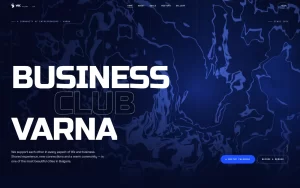 Business Club Varna2 years, 140+ members, zero ad spend
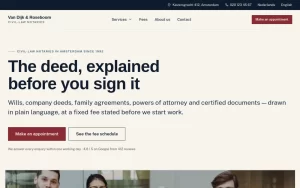 Van Dijk & RoseboomPublished fees, Dutch and English as equals
 Construction Elite RoofingCost per booked job cut by 41%
 Mascot MilleniumBuyers from 12 countries in year one
 Solene EstatesLive filtering across sale and rental
 Ignite Art UniversityFiltered course finder, ten degrees
 Marchetti Italian FurnitureSeparate catalogue and bespoke paths
 KUKUIPart of the team managing $8M+ a year