The conversions table is open on the screen and there are seven rows in it. Six are marked primary. One of them is called something like “Contact page view”. Another is a PDF download. Somewhere in the list is the form submission that represents an actual human being asking for a quote, and it is sitting there with the same weight as the PDF.
The owner is saying that the monthly report looks fine and the phone has not rung any more than it did last year. Both things are true, and the table on the screen is why.
An account optimises towards whatever you tell it to count
That sentence sounds obvious and almost nobody acts on it. Automated bidding is relentless and literal. Give it an event that is cheap and plentiful and it will become excellent at buying that event, which means buying the audience most likely to produce it. Cheap events attract cheap traffic. The account quietly learns to find people who load pages.
Nothing in the interface flags this, which is the whole problem. It is the most expensive failure we find in audits and the hardest to see from a dashboard, because the dashboard is reporting honestly on a question nobody meant to ask. We wrote about this family of problems in where Google Ads budget actually leaks.
What tends to be sitting in the primary column
- Thank-you page views firing on page load rather than on submission, so bots, refreshes and anyone who bookmarks the URL all count.
- Form starts, or field focus events, tagged during a tracking setup that was never finished.
- Phone number clicks counted as calls. On a mobile a tap is not a conversation. Some never dial and some dial and hang up.
- Scroll depth or time on page, imported from Analytics because somebody wanted more data points.
- Newsletter signups and PDF downloads weighted identically to sales inquiries.
- The same conversion counted twice, once by a direct tag and once by an Analytics import.
The test
A conversion should be an event somebody at your company would recognise as a lead. A submitted form with contact details you can act on. A call that lasted long enough to be a conversation. A booked appointment. A completed purchase. If your salesperson would not put it in the pipeline, it is not a primary conversion.
Most accounts should run one or two primary actions. Seven primary actions is not a target, it is an average of seven different targets, and it means the bidding is optimising towards a blend nobody designed.
One warning before you start demoting things, because the primary and secondary labels are less absolute than they look. Google’s documentation states that conversion actions inside a custom goal are used for bidding regardless of whether they are marked primary or secondary, and that primary actions excluded from optimisation may still be used to enhance predictions. So check the goals, not only the actions.
The order to fix it in
- Audit what exists. For every action, note the source, the counting setting, whether it is primary, and the date it last fired. Anything that has not fired in months is usually broken rather than unpopular.
- Set counting correctly. Lead generation actions count one per click. Ecommerce counts every purchase. Reversed, it inflates a lead account substantially and nothing warns you.
- Move everything that is not a real inquiry to secondary. Make it one change, then leave the account alone for a fortnight while the bidding re-learns.
- Fix the trigger. Conversions should fire on a submission confirmed by the form handler, not on arrival at a URL anyone can reach directly.
- Give call conversions a minimum duration. Choose it deliberately rather than leaving the default. For most service businesses sixty seconds is a defensible floor, because below that you are counting wrong numbers and hang-ups.
- Turn on enhanced conversions. It sends first-party data hashed with SHA256 so conversions can still be matched when cookies fail, which is now ordinary rather than exceptional. Note that Google has announced it is combining enhanced conversions for web and for leads into a single on/off setting, so if you set these up separately years ago, go and look at which switch yours is actually on.
- Import the outcome, not just the inquiry. If you run a CRM, send qualified and closed statuses back as offline conversions. Almost nobody does this step, and it is the difference between an account optimising for leads and an account optimising for customers. It is also the only way to act on the distinction in lead quality versus lead volume.
Consent, which is not optional here
Bulgaria is in the EEA, so this applies to you even if your customers are all within fifty kilometres of the office.
Consent mode is how a Google tag is told what a visitor agreed to. Google’s developer documentation defines the signals individually: ad_storage for advertising cookies and device identifiers, ad_user_data which “sets consent for sending user data to Google for online advertising purposes”, ad_personalization for personalised advertising, and analytics_storage for analytics. The last two of those four were the additions that made consent mode v2 a different thing from v1, and they exist because of the EU’s Digital Markets Act rather than because Google wanted them.
The implementation choice matters more than most agencies explain. In basic consent mode the tags do not load at all until the visitor interacts with your banner. In advanced mode the tags load with consent defaulted to denied, and when consent is refused a cookieless ping still goes out, which is what lets Google build an advertiser-specific model rather than a general one for the conversions it cannot observe. Basic mode is the more conservative reading of the law. Advanced mode produces materially better data. That is a decision for you and whoever advises you on data protection, and it should be a decision rather than whatever your cookie plugin shipped with. If nobody has looked at how the tags fire on your site, that is implementation work rather than account work.
Where honest tracking runs out
Some businesses cannot track the thing that matters. A restaurant, a walk-in clinic, a shop with no booking system. The sale happens offline and every available signal is a proxy. In those accounts we prefer a small number of honest proxies, calls over sixty seconds and direction requests, and we say plainly that the account will be steered partly by what the owner notices in the business. Local businesses often get more from the Business Profile than from the ad account for exactly this reason.
Low-volume accounts have the opposite problem. A handful of real inquiries a month is not enough for the bidding to learn from the sale itself, and Google’s own advice is to evaluate a target over a period containing at least thirty conversions. There it can be correct to keep a higher-volume soft event as a bidding signal, as long as it genuinely correlates with real inquiries and somebody checks that correlation rather than assuming it.
Back to the table
When the six primary actions become one, the reported conversion number falls, often by most of its height. That is the conversation to prepare for, because it arrives before any improvement does and it looks exactly like damage.
It is the first number the account has produced that corresponds to something happening in the business. Everything else, the bid targets, the budget from your margin, the question of whether any of this is worth doing, has been waiting on it.
 Business Club Varna2 years, 140+ members, zero ad spend
 Van Dijk & RoseboomPublished fees, Dutch and English as equals
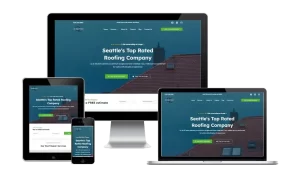 Construction Elite RoofingCost per booked job cut by 41%
 Mascot MilleniumBuyers from 12 countries in year one
 Solene EstatesLive filtering across sale and rental
 Ignite Art UniversityFiltered course finder, ten degrees
 Marchetti Italian FurnitureSeparate catalogue and bespoke paths
 KUKUIPart of the team managing $8M+ a year