A German retail bank once handed three academics its customer records and let them settle an argument. Roughly 10,000 people had opened accounts in 2006, about half through the bank’s refer-a-friend scheme and half through ordinary marketing. The bank paid 25 euros for every successful introduction. The question was whether that money bought anything real.
It did. Referred customers turned out to be worth 16 to 25 per cent more than comparable customers acquired any other way. They churned at a rate roughly 18 per cent lower, and unlike the margin advantage, which faded to nothing after about a thousand days, the loyalty gap did not close. Van den Bulte put the return on the 25 euros at about 60 per cent over six years. The study is Schmitt, Skiera and Van den Bulte, “Referral Programs and Customer Value”, Journal of Marketing, vol. 75 no. 1, January 2011; Van den Bulte walks through the numbers in a Knowledge@Wharton interview.
Hold on to the 25 euros. We will come back to it.
Ask a small business owner in Varna where their best clients came from and most will say word of mouth. Ask what they do to produce it and the answer is almost always nothing. They are describing their cheapest acquisition channel and their only unmanaged one in the same breath.
Why referrals stall
Not because customers are unhappy. We ran a business club here for two years, sitting with owners and their actual numbers, and the same three blockages came up over and over.
Timing. The moment someone is most likely to recommend you is the moment after you delivered something that worked. That window is short. Most owners ask at renewal or invoice time, months later, when the feeling has gone flat.
Vagueness. “Do you know anyone who might need us?” asks the customer to search their entire memory with no filter applied. The polite answer is that they will keep you in mind, which means no.
Embarrassment. This is the real one, and it is worth naming plainly rather than dressing up as a process problem. Owners feel like beggars when they ask. So they hedge, and the hedge tells the customer this is a big favour, and the customer deflects to spare everyone. We have watched people who will cheerfully quote 40,000 leva for a job lose their nerve completely over a sentence that costs nothing.
None of that is about the quality of your work.
What a referral system actually is
Not a rewards programme. A referral system has a trigger, a sentence, and a record, and the record is the part everyone skips.
The trigger is an event in your delivery, not a date in your calendar. Project handed over. First result landed. Problem fixed. A customer saying something appreciative is a trigger firing, so treat it as your cue rather than a nice moment to enjoy and forget.
The sentence is one specific ask. Specific means naming the kind of person you want introduced to, so the customer runs a narrow search instead of an open one. “Who else do you know running a workshop about your size that is still booking jobs by phone?” Narrow beats polite.
The record is a line somewhere you will look again: who was asked, when, what came back. Without it you have a habit, and habits decay quietly.
Building it
- Fix two trigger points and write them into your delivery checklist, so the ask happens whether or not anyone feels like it that day.
- Offer to write the introduction yourself. Most people do not refer you because composing the message is work. Remove the work.
- Ask for one name. One name is a small decision. “Two or three people” is a project, and projects get postponed.
- Tell the referrer what happened. This is the step that produces the second and third referral, because people refer again once they have seen one handled well.
- Count asks and arrivals every month. Uncounted activities stop.
Partners beat customers
Customer referrals arrive one at a time. A referral partner arrives continuously: a business serving the same customer at a different moment, with nothing competing. The accountant and the lawyer. The plumber and the builder. The photographer and the web developer.
Start by sending first. Refer someone a real piece of business and ask for nothing. In a city the size of Varna, reciprocity is enforced by the fact that everyone will meet again, and the person who gives first sets the terms. Two or three of these relationships have outperformed a year of paid media for several of the local service businesses we have worked with, at a fraction of the cost. They also take months to mature, which is the argument for starting one now rather than in the quarter you need it.
Now, the 25 euros
The bank’s reward is the part of that study everyone copies, and it is the part that mattered least. Sixty per cent over six years on a 25 euro payment is fine. The 18 per cent retention gap, which cost nothing and never faded, is where the value sat.
What the 25 euros really bought was a reason to ask. It gave staff a script and permission, and it turned an awkward personal favour into a normal piece of bank admin. The incentive solved the embarrassment problem, not the economics problem.
Which is why, in a professional services business, you can usually solve the embarrassment some other way and keep your margin. If you do use an incentive, make it a thank-you rather than a fee. Anything that smells of commission changes what the recommendation means, and customers can feel it. The exception is a formal partner arrangement, where a disclosed commission is ordinary and expected. Disclosure is the whole distinction. Hidden payment breaks trust; payment does not.
One figure to treat carefully
Jonah Berger’s Contagious (Simon & Schuster, 2013) reports that only about 7 per cent of word of mouth happens online, the rest face to face. The direction is almost certainly right and it matches what we see. But the number comes from the Keller Fay Group, a market research firm running conversation panels, not from a controlled study, and it has been repeated for over a decade without being re-measured. Use it to decide where to put your attention. Do not quote it at anyone as a fact.
The practical version is duller anyway: the conversation you want to be mentioned in is happening in a car, a kitchen, or a corridor, and nothing you post will be in the room. Only a person will be.
So pick one trigger point. Write one specific sentence. Use it on every customer for a month and write down what comes back. Referral economics are the cheapest in your business, and if you want to see how they compare with what you currently pay for a customer, we have written about the true cost of acquiring one. Mapping trigger points into a sales process is part of our business development work.
The sentence is free. The nerve to say it out loud is the entire price.
 Business Club Varna2 years, 140+ members, zero ad spend
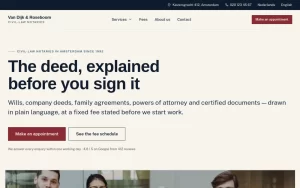 Van Dijk & RoseboomPublished fees, Dutch and English as equals
 Construction Elite RoofingCost per booked job cut by 41%
 Mascot MilleniumBuyers from 12 countries in year one
 Solene EstatesLive filtering across sale and rental
 Ignite Art UniversityFiltered course finder, ten degrees
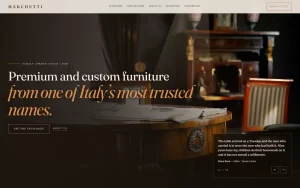 Marchetti Italian FurnitureSeparate catalogue and bespoke paths
 KUKUIPart of the team managing $8M+ a year