There is an asymmetry in Google Ads that explains almost everything about why negative keyword lists stop working, and it is written plainly in Google’s own documentation.
Your positive keywords expand. Close variants, plurals, synonyms, reworded searches, and since this year the search term matching inside AI Max, all widen the set of queries a keyword can be shown for. Your negative keywords do not expand at all. Google’s page on them states that negative keywords will not match to close variants or other expansions, and that you have to add synonyms and singular or plural versions yourself. Casing and misspellings are handled for you. Nothing else is.
So one side of the account grows on its own and the other side only grows when a human types into it. That is not a list that needs occasional tidying. That is a list that falls behind by default.
The rot is mechanical, not careless
Block the broad negative “flowers” and your ad can still serve on “red flower”. Block “template” and “templates” walks straight through. Most owners discover this the expensive way, having added a sensible-looking negative months ago and assumed the door was shut.
There is a second clause worth knowing about, because it is genuinely obscure. Google notes that an ad might still show when somebody searches a phrase longer than sixteen words and your negative keyword falls after that sixteenth word. In most accounts this never matters. In accounts that attract long, rambling, half-sentence searches, which includes a lot of medical and legal queries, it occasionally does.
Meanwhile the query mix underneath your keywords moves for reasons that have nothing to do with you. Search behaviour shifts, competitors change their bidding, you publish a new service page and pull in a new neighbourhood of intent. A list built in January is a snapshot of a market that has since moved on.
Three layers, and what belongs in each
Most accounts we audit have one messy list applied everywhere, or negatives scattered across ad groups with no governing logic. Three layers works better.
Account-level shared lists. Universal junk that could never be right for your business: job and career terms, free and DIY terms, unrelated industries, other countries if you only work locally. Build it once, apply it to every campaign, add to it slowly.
Campaign-level negatives. Traffic control between your own campaigns. This is what stops brand queries leaking into the campaign you built to measure cold acquisition, and stops a general campaign swallowing the queries you built a dedicated one for. This layer is missing from most accounts, and its absence distorts reporting more than any other single setting.
Ad group negatives. Precision only, keeping a query that means one thing out of an ad group built around another meaning. If you find yourself needing a lot of these, the ad groups are wrong.
Match types trip people up, and the consequences run in one direction. Negative broad blocks searches containing all your terms in any order, which makes it the instrument that causes accidents. Negative phrase blocks the terms in order, with words allowed either side. Negative exact blocks only that precise query with nothing added. When unsure, go narrower.
A routine that survives a busy month
The reason lists rot is that the standard advice is too heavy for somebody who also runs a business. This version is deliberately small.
- Weekly, ten minutes. Search terms report, last seven days, sorted by cost. Read the top thirty. Add negatives for anything obviously wrong. Close the tab and optimise nothing else.
- Monthly, one hour. Last sixty days, sorted by cost, filtered to terms with zero conversions and spend above your rough cost per lead. Read all of them. This is the session that catches the plausible near-misses, the queries that look like customers and never are.
- Quarterly, half a day. Review the negatives rather than the search terms. Hunt for broad negatives added in a hurry that are now blocking traffic you want, and check that your campaign-level negatives still match how the account is actually divided.
- After any structural change. New campaign, new service, new landing page, a match type switched, or any automated expansion turned on. Check the report after seven days instead of waiting for the monthly cycle.
The weekly ten minutes is the one that matters. If you do only one of the four, do that. Consistency beats depth here by a long way, and reading the report properly takes less time than people expect once it is a habit. Keeping that habit running is a fair slice of what ongoing optimisation actually means when we do it for a client.
When negatives do the damage
Negatives are not free. Each one narrows the space the bidding system is allowed to explore, and accounts can be strangled by enthusiastic blocking.
The recurring mistakes: a broad negative on a single word that also appears in your best converting queries. Excluding an entire city because one suburb performed badly. Cutting a term after two weeks and forty clicks, which is not enough data to conclude anything. Importing a competitor’s negative list wholesale, which installs somebody else’s business logic in your account.
Low-volume accounts deserve a different posture. If you get a handful of conversions a month, Smart Bidding is already short of signal, and cutting the query space further can leave a campaign unable to learn. In those accounts we stay strict on obvious junk and leave the ambiguous middle alone.
It is also worth checking what your account counts as a conversion before you start cutting. Blocking traffic on the basis of a conversion count that does not reflect real inquiries will remove exactly the wrong terms, with total confidence and no warning.
Ships
A hull picks up growth from the day it enters the water. Weed, barnacles, a film of slime nobody can see from the quay. The drag builds slowly and the fuel bill climbs with it, and by the time the difference is obvious on paper the vessel has been burning extra for months. So hulls get cleaned on a schedule rather than when somebody notices. The yards in Varna work to a calendar, not to a complaint.
The part you cannot audit
Back to the asymmetry, because it has a sharper edge than the maintenance schedule suggests.
When a negative keyword is too loose and blocks a query that would have bought from you, nothing happens. No impression, no click, no line in the search terms report, no entry in the change history flagged as a loss. The traffic simply never arrives. Every other mistake in a Google Ads account leaves evidence somewhere in the interface: a bad bid shows up as cost, a bad ad shows up as a collapsed click-through rate, a broken landing page shows up as a conversion rate you can see falling. A bad negative shows up as nothing at all.
That is why the quarterly review of your own list exists, and it is the session everyone skips, because it is the only one where the report cannot tell you what you did wrong.
 Business Club Varna2 years, 140+ members, zero ad spend
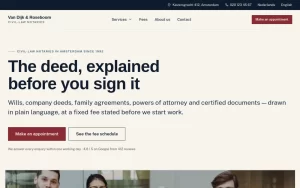 Van Dijk & RoseboomPublished fees, Dutch and English as equals
 Construction Elite RoofingCost per booked job cut by 41%
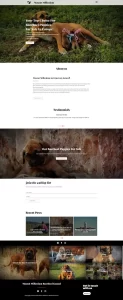 Mascot MilleniumBuyers from 12 countries in year one
 Solene EstatesLive filtering across sale and rental
 Ignite Art UniversityFiltered course finder, ten degrees
 Marchetti Italian FurnitureSeparate catalogue and bespoke paths
 KUKUIPart of the team managing $8M+ a year